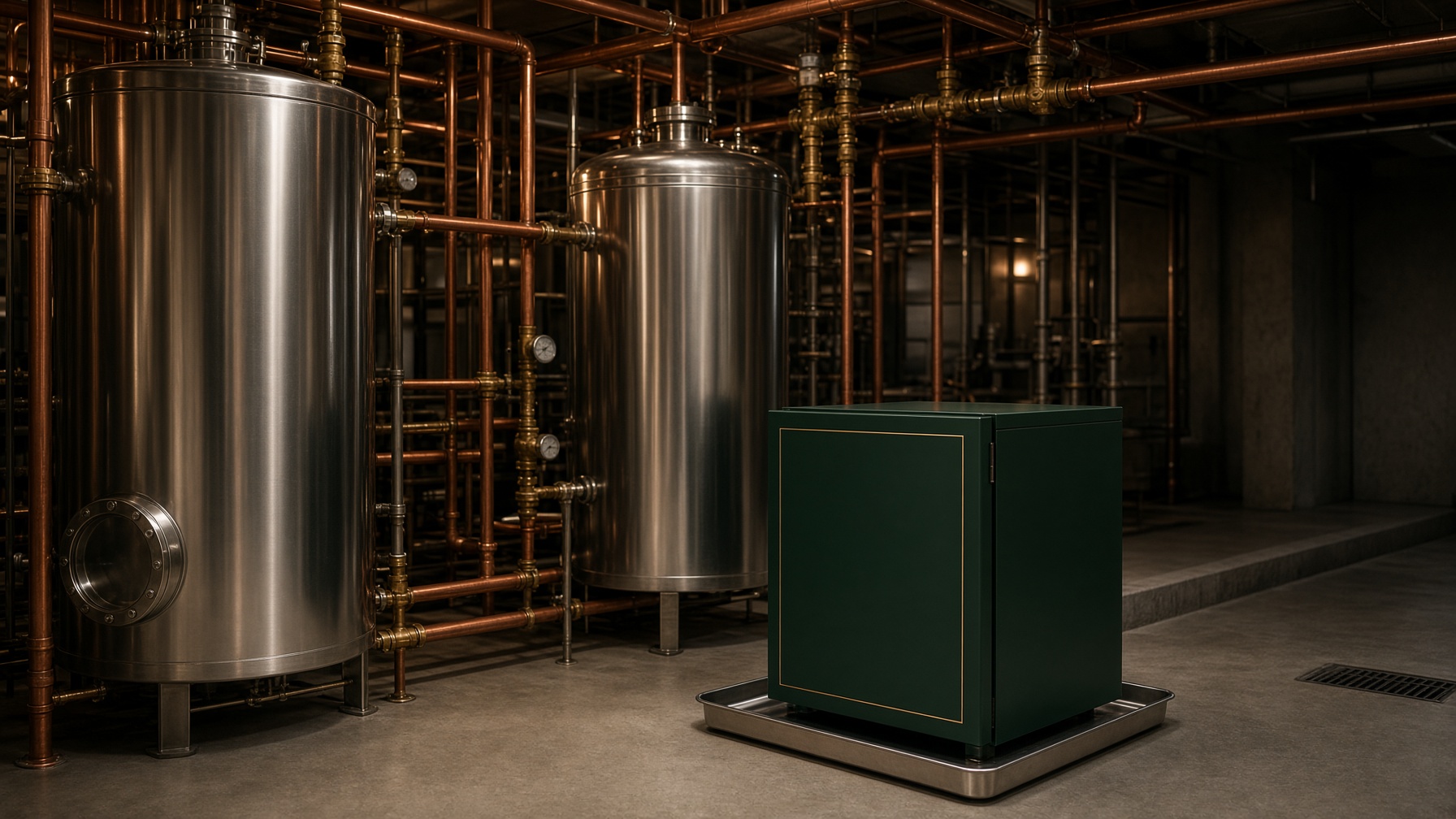
Hotel plant room
H1-Lite
Smaller independents. First measured pilot where headroom is limited.
- Draw
- 0.5–0.7 kW
- Heat
- 12–17 kWh/day
Heat-recovery compute · London
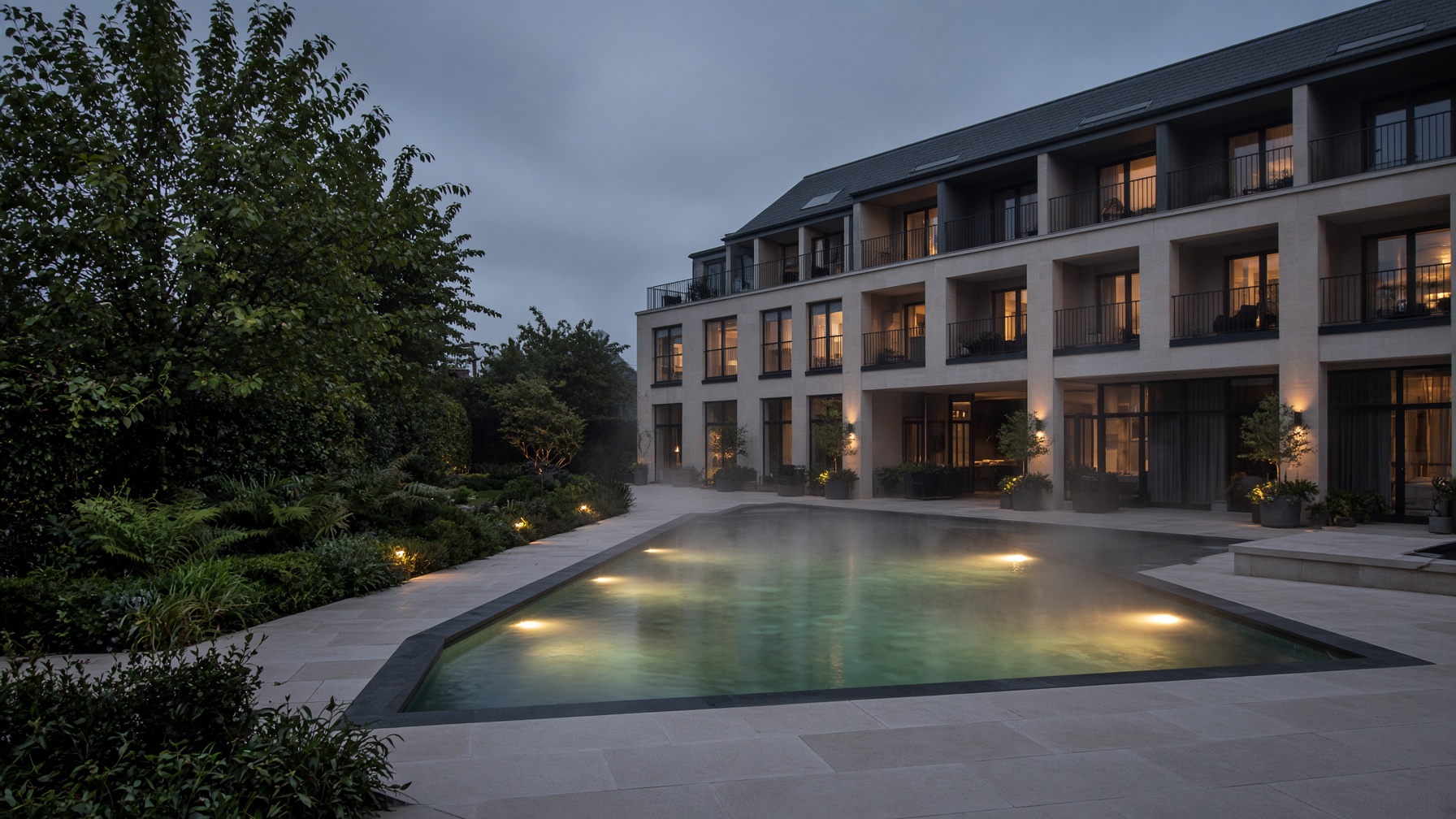
Arete Heat Cloud installs managed compute where a hotel already heats water and a pool — and inside one compartment of a parcel locker that is already standing there.
01 · Hotels
A cabinet in the plant room. GPU heat moves through a heat exchanger into the preheat loop — guest cylinders, and the pool circuit when the survey says it can.
See the hotel pilot
02 · Lockers
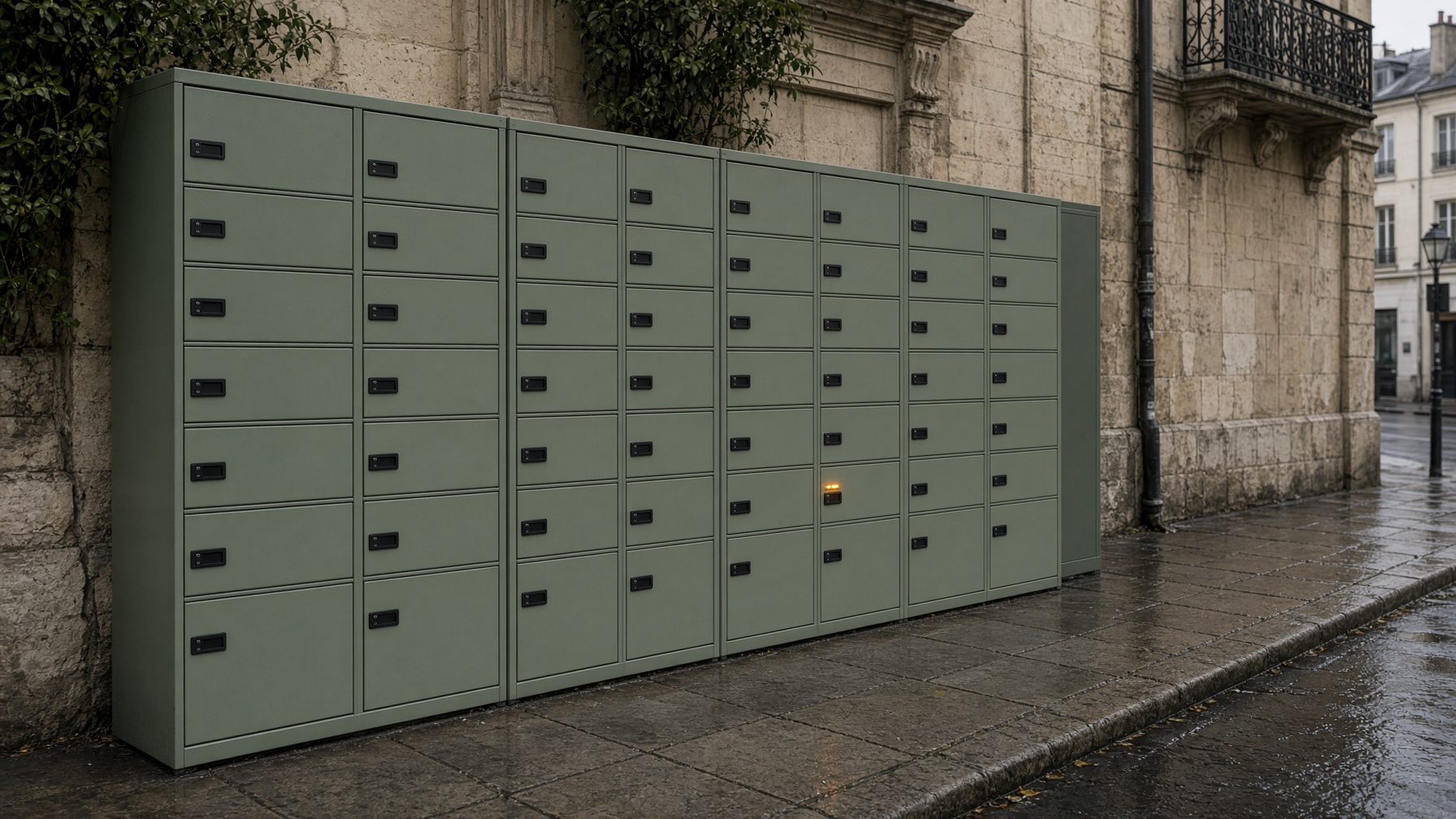
Parcel lockers are already on the pavement and in buildings. We take a single compartment and run it as a distributed AI server. The other doors keep taking parcels.
See the locker node
Principle · heat
A GPU is a heater that also computes. Electrical energy in, heat out, then a preheat loop. One kilowatt-hour at the chip is about one kilowatt-hour of heat. The meter, not the diagram, says what crossed the exchanger.
A metered circuit feeds the cabinet. What the meter records is what the GPU is allowed to draw.
The chip does the compute. Nearly all of that electricity leaves the silicon as heat. That is the source.
Liquid lifts the heat off the package. This loop stays on the IT side of the cabinet.
A double wall. Coolant and building water meet as temperatures, not as fluids.
Preheat for guest hot water, and the pool circuit where the plant can take it. Boilers still finish the setpoint.
Principle · compute
A distributed AI server is not a new hall. A training job is split across nodes that already have an address — a hotel plant room, a locker bay — and the pieces come back as one run. Inference uses the same nodes between training jobs.
Training job
One run, sharded
Scheduler sends a shard out. Gradients and checkpoints return.
H1
Hotel plant
Shard A
L1
Street locker
Shard B
H2
Leisure hotel
Shard C
L1
Building locker
Shard D
Return path — the run stays one job. Parcel data, guest Wi-Fi, and payment networks are not on this path.
Revenue model
The host does not fund construction. Arete builds the node, then rents the GPU. That rental is the income that carries the hardware, the power, and the service. The hotel receives heat and a report. It is not sold a share of the server.
01
No construction cost for the hotel or the locker operator. They provide the place: a plant room, or one bay.
02
Cabinet, GPU, exchanger or sealed bay, meter, and the connection. The hardware stays ours.
03
Training runs and inference are sold as managed GPU time. That rental is the income.
04
Hardware, electricity, and service are carried by the server rental — not by a bill to the host for the build.
The site agreement sets the meter and the term. This is the structure — host build at no construction cost, server rental as the income — not a forecast for a building we have not surveyed.
Two businesses, one rule
Hotel plant room
Smaller independents. First measured pilot where headroom is limited.
Hotel plant room
The main hotel node. Power-capped professional GPU. DHW, and a pool where the circuit allows.
Hotel or leisure plant
Two GPUs, liquid-cooled. Larger hotels, hostels, and sites with a pool loop.
Parcel locker bay
One compartment. Sealed compute module. Neighbouring doors stay parcel doors.
Hotel figures are typical ranges for a power-capped professional GPU, not a forecast for a named site.
What this is not
Arete sells compute. A hotel receives metered heat and a report. A locker operator keeps a locker, with one bay reserved under a site agreement.
Boilers or heat pumps still finish the temperature. Guest hot water does not depend on the GPU.
The node uses a segregated connection. It does not sit on the hotel’s guest Wi-Fi.
Arete sells managed compute — inference, rendering, batch. The hotel is not an investor in the hardware.
In a locker, the compute bay is thermally isolated. Waste heat is rejected away from the other doors.